INFORMATION ABOUT CECEP
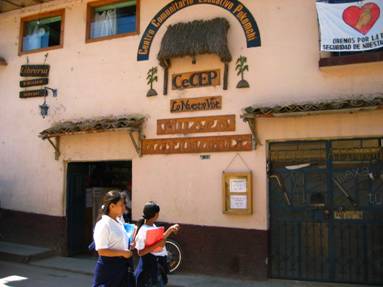
CeCEP (Centro Comunitario Educativo Pokomchi) is a not-for-profit, non-governmental organization. It provides social and educational services for the local community. Their objectives are:
- To encourage esteem for and increased value of the Pokomchi culture and language.
- To promote Pokomchi literature through its production and distribution.
- To contribute to the social development and academic promotion of the Pokomchi community.
CeCEP was formed approximately 10 years ago by a group of local people who wished to increase appreciation and value for the culture and language of the indigenous Pokomchí. They initiated a literacy program in the villages, set up a Pokomchí language school and created the Pokomchí cultural museum ‘Museo Katinamit’. These efforts were designed to cultivate appreciation for the Pokomchí culture, but they also highlighted the serious social and economic problems affecting this ethnic group. Awareness of these problems prompted CeCEP to also focus on the development of increased economic opportunities for the Pokomchí people, including ethno-tourism. Ethno-tourism incorporates cultural elements with tourist activities, and is beginning to provide promising economic benefits to the local region.
The Development of CeCEP
CeCEP had its origins in the motivation of Christian missionaries who were interested in translating the Bible into Pokomchí. In time, they created a Pokomchí language school, in which they held classes, translated documents, and promoted and distributed Scripture portions and other literature in Pokomchí. In 1998 CeCEP became a Non-Governmental Organization, and began to extend its activities in order to combat the social and economic problems that affect the majority of Pokomchis in the area.
Pokomchí Ethno-Tourism Project
Disregard for the rich Pokomchí culture has resulted in society having negative views towards the ethnic group. For many years there has been a decrease in the value of the different social cultures of the ethnic Mayan group. This has resulted in a loss of cultural identity of the people who speak Pokomchí. Furthermore, it has resulted in a breakdown in relations between the Pokomchí people and the Ladino people who live in this region, with discrimination and contempt being shown towards members of the Mayan group. From this situation emerged the Pokomchí ethno-tourism project with the aim of revealing the broad, rich Pokomchí culture to both Guatemalans and foreigners. In addition to showing the cultural values, environment, idiosyncrasies and cosmology of the Pokomchís, the project aimed to promote interaction through visiting with members of the Mayan group, and a promotion of traditional craftsmanship, such as ceramics and textiles.
In 1999, CeCEP saw the opportunity for some Pokomchí communities to benefit through a USAID project supporting local initiatives following hurricane Mitch, which hit Central America in 1998, leaving thousands of people destitute. Asociación Nacional del Café (ANACAFE) also contributed towards this. The project offered support to other sectors of the local economy with development potential, and CeCEP was involved as a local administrator of the project, contributing through the design of an ethno-tourism bid. The Pokomchí ethno-tourism project is based in cultural and economic promotion, while pursuing the benefits of sustainable and integrated development for the Pokomchí people.
Community Projects
The Pokomchi ethno-tourism projects are based in two communities, Pamuc and Aquil Grande. Tourists stay with Pokomchí families in order to experience and share their culture. Through the funding acquired by CeCEP in 1999, the community of Pamuc was able to establish a community based tourism project, where they constructed a hostel. CeCEP provided human resources in the form of Peace Corp Volunteers, and assisted in the training of community members involved in this project. There are now 25 families who offer hospitality to visitors who come to stay in the Hostal Nuboso Maya–Pokomchí. Guided trips to the nearby cloud forest are offered, and visitors can take part in cultural activities where they learn about customs and everyday tasks of the Pokomchí people. The project has been very successful in its development and has seen an annual increase in visitors since its first group in 2001. In 2003 the project received 140 visitors and were able to implement various projects to improve the community including scholarships, school supplies, and reforestation with macadamia trees. These projects received support from a variety of international organizations.
The community of Aquil Grande also has tourism potential. The main attraction is the sugar mill built in 1888, which produced unrefined brown sugar or “panela” up until the early 1990s. The community also produces a variety of agricultural products, including fruits, coffee and cardamom. A tourism committee has been elected in the community and CeCEP is working with them to train the families that will be hosting and guiding the tourists. The community has encountered obstacles in obtaining funds for the reconstruction of the sugar mill but they are still hopeful that an international organization will assist them in their efforts. |